Loading...
Serving Diamond Bar, CA and surrounding areas. (909) 760-1426
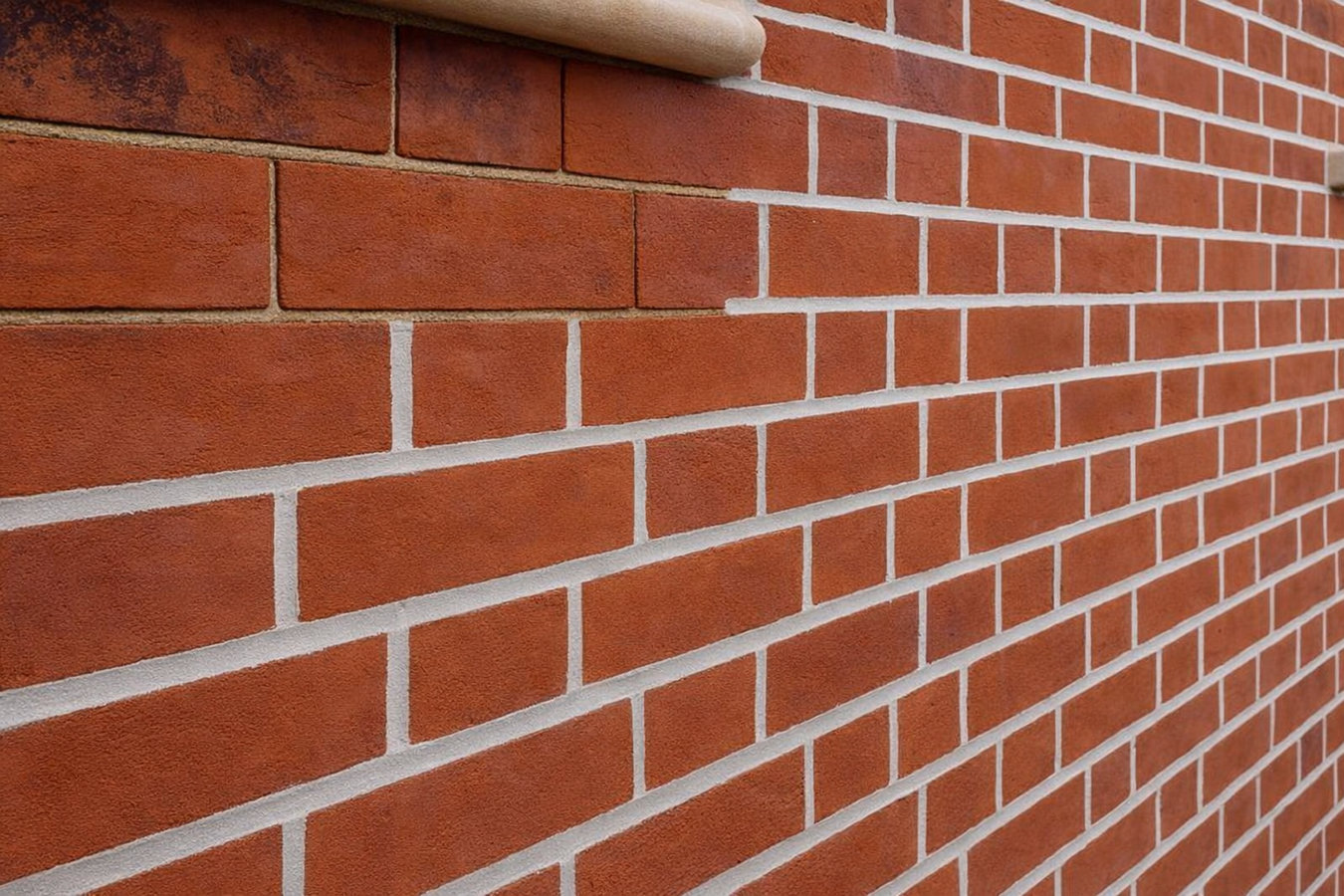
Crumbling mortar lets rain and pests into your walls every wet season. We remove the old material and pack in matched mortar that holds for decades, not months.
Brick pointing in Diamond Bar is the process of removing crumbling mortar from the joints between bricks and packing in fresh mortar that matches your existing brick. A small section - a chimney or a garden wall - usually takes one to two days. A full exterior repoint on a larger home runs three to five days. Most jobs in Diamond Bar do not require a permit because pointing is considered routine maintenance, not structural work.
Diamond Bar was largely built between the 1960s and 1980s, and a large share of the original mortar on those homes is now 40 to 50 years old - well past its typical 25 to 30 year service life. Homeowners often notice the problem only after a wet winter reveals water stains near a chimney or a brick retaining wall starts to look soft at the joints. Pointing pairs naturally with our foundation repair service when water that entered through failing mortar has already found its way to the structure below.
Walk up close to your brick chimney, planter wall, or any brick surface and look at the lines between the bricks. If the mortar looks sandy, cracked, or is actually missing in spots, that is the clearest sign repointing is needed. A quick test: drag a key lightly along a joint - if mortar crumbles out easily, it is past due.
Chalky white streaks or patches on your brick are called efflorescence - salt being pushed out of the wall by water moving through it. In Diamond Bar, this often appears after the winter rain season and is a reliable sign that water is already inside the mortar joints. It does not mean the wall is about to fail, but it does mean the longer you wait, the more damage accumulates.
After any notable earthquake - which are common in Los Angeles County - walk your property and check brick surfaces for new cracks. Cracks that follow the mortar lines rather than cutting through the bricks themselves are usually a pointing issue and are repairable. Cracks that cut through the bricks are a more serious structural concern that needs a different kind of evaluation.
If you have a brick chimney and notice water stains on the ceiling or wall near the fireplace after rain, deteriorated mortar joints are one of the most common causes. Diamond Bar's rainy season runs roughly November through March, so if you are seeing new stains each winter, the mortar is likely letting water in from outside.
Every pointing job starts with removing old mortar to the right depth - roughly three-quarters of an inch - before any new material goes in. Skimming fresh mortar over crumbling joints is a shortcut that fails within a season. We assess your brick type first, then choose and mix a mortar that matches your existing material in both strength and color. The finished joints are tooled to be flush or slightly recessed, with no smearing across the brick face. For HOA communities, we provide the documentation your design review board typically needs before exterior work can begin. Our tuckpointing service covers decorative two-color joint work on older brick surfaces where appearance is as important as function.
When a pointing assessment reveals cracks that cut through bricks rather than just mortar joints, that points to a structural or foundation issue that needs a separate evaluation. In those cases, our foundation repair team can look at what is happening below the surface before any pointing work begins - so you are not repointing over a problem that will reopen the joints within a year.
For Diamond Bar homes where winter rain and decades of heat cycles have worked mortar loose from chimney joints - the most common pointing need on homes from the 1970s and 1980s.
For hillside lots where deteriorating mortar in a retaining wall is a safety concern, not just a cosmetic one - includes seismic-aware inspection of corners and caps.
For decorative brick walls and planters that have developed sandy, receding joints after years of wet-dry cycles - restored and color-matched so the repair is not obvious.
For homes with brick accent panels, entry columns, or partial brick exteriors where joint deterioration is spreading and needs a systematic pass before the next rain season.
Diamond Bar was developed primarily between the 1960s and 1980s, which means a large share of the brick chimneys, retaining walls, planters, and decorative columns across the city were built with original mortar that is now 40 to 50 years old. Mortar has a typical service life of 25 to 30 years. That math means a lot of Diamond Bar homes are at or past the point where pointing is genuinely necessary rather than optional. The city's wet winters followed by long hot summers accelerate the cycle - mortar absorbs moisture in the rainy season, then dries and contracts in the heat, and that repeated movement slowly opens cracks that let in more water each year. Homeowners in Walnut and surrounding communities face the same housing age and climate pattern, and we see the same pointing needs across the area.
Diamond Bar also sits in a seismically active part of Los Angeles County, and even minor ground movement can open hairline cracks in mortar joints over time - particularly at corners, chimney bases, and the tops of retaining walls. That seismic factor is worth knowing because it means mortar deterioration here is not always caused by neglect. It can be a natural result of the ground doing what it does in this region. Homeowners in Pomona face the same combination of aging housing stock and seismic stress. The Brick Industry Association sets the technical standards for mortar selection and joint depth that inform how we approach every pointing job.
We ask a few basic questions - what type of surface needs work, roughly how large it is, and whether you have noticed any water damage. Most homeowners hear back within one business day, and we schedule a free on-site estimate within a few days.
We walk the area with you and inspect the joints closely - checking depth of damage, brick condition, and what mortar was originally used. Your estimate covers scope, materials, and timeline. A thorough contractor takes time here; a rushed one who quotes in under five minutes without really looking is a warning sign.
If your home is in a Diamond Bar HOA, exterior maintenance work may need written approval before the crew starts. We can provide the description and material documentation most HOAs ask for, which helps the approval move quickly.
The crew removes old mortar to proper depth, cleans the joints, packs in fresh matched mortar, and tools the surface. Most jobs take one to three days. Fresh mortar needs 24 to 48 hours before it gets wet and up to 28 days for full strength. In Diamond Bar's summer heat, we may recommend light misting for the first few days.
Free on-site inspection, written quote, no obligation. We respond within one business day.
(909) 760-1426Using the wrong mortar mix - one that is harder than your existing brick - forces moisture into the brick face and causes spalling over time. We assess your brick first and choose a mix that matches in both strength and color, so the repair holds and the finish looks right.
We check corners, chimney bases, and retaining wall caps specifically - the areas most likely to show stress from ground movement. This is standard practice on all our Diamond Bar pointing jobs, not an add-on, because that is where earthquake-related cracking most often shows up first.
We have worked with HOA-governed neighborhoods throughout Diamond Bar and know what documentation the design review process typically requires. We prepare what you need so the approval does not stall your project before the work even starts.
If your brick does not actually need pointing yet, we will tell you. We give you an honest read on where the mortar stands and a written estimate for the work that is genuinely needed - not the maximum scope. That approach has kept homeowners calling us back for over five years.
Diamond Bar pointing work that holds for 25 or more years comes down to two things: removing enough old mortar and using the right mix for your specific brick. Both of those choices happen before the first trowel of new material goes in. You can verify our license through the California Contractors State License Board before signing anything, and the National Park Service Preservation Briefs on repointing are the technical standard we follow for mortar depth and mix selection on every job.
When failing mortar has let water reach the structure below - foundation assessment and repair before pointing work begins ensures the fix addresses the root cause.
Learn MoreDecorative two-color joint work for older brick surfaces where both structural integrity and finished appearance matter.
Learn MoreFall and spring appointments fill up fast in Diamond Bar - reach out now and lock in your project before the next wet season.